Inaugural Traffic Robots
Traffic lights didn't solve road violence in 1931
by Katy Jean
For a century, people have forged resistance against certain fundamental truths:
Halifax traffic is a nightmare. The only thing more nightmarish is the drivers creating the traffic. And the robots are taking over.
Roughly half a million cars are registered in Halifax today.
In 1930, less than 40,000 were registered in the entire province of Nova Scotia. There are also roughly 40,000 drivers today pretending they don’t see you when you’re attempting to cross Barrington Street.
Halifax’s first attempt to control traffic and drivers was the ingenious ‘stop street.’
Stop signs at the end of roads was the novel idea that prevented the earliest drivers from whipping around corners and into intersections without any discretion.
Mind, the first blinker wasn’t until Buick made it an option in 1939. And then a decade more for manufacturers to catch on; longer still until regulation.
The other form of traffic control was people, cops.
In heavier traffic areas, like the pre-bridge-era ferry that used to carry cars, traffic police were used for traffic control.
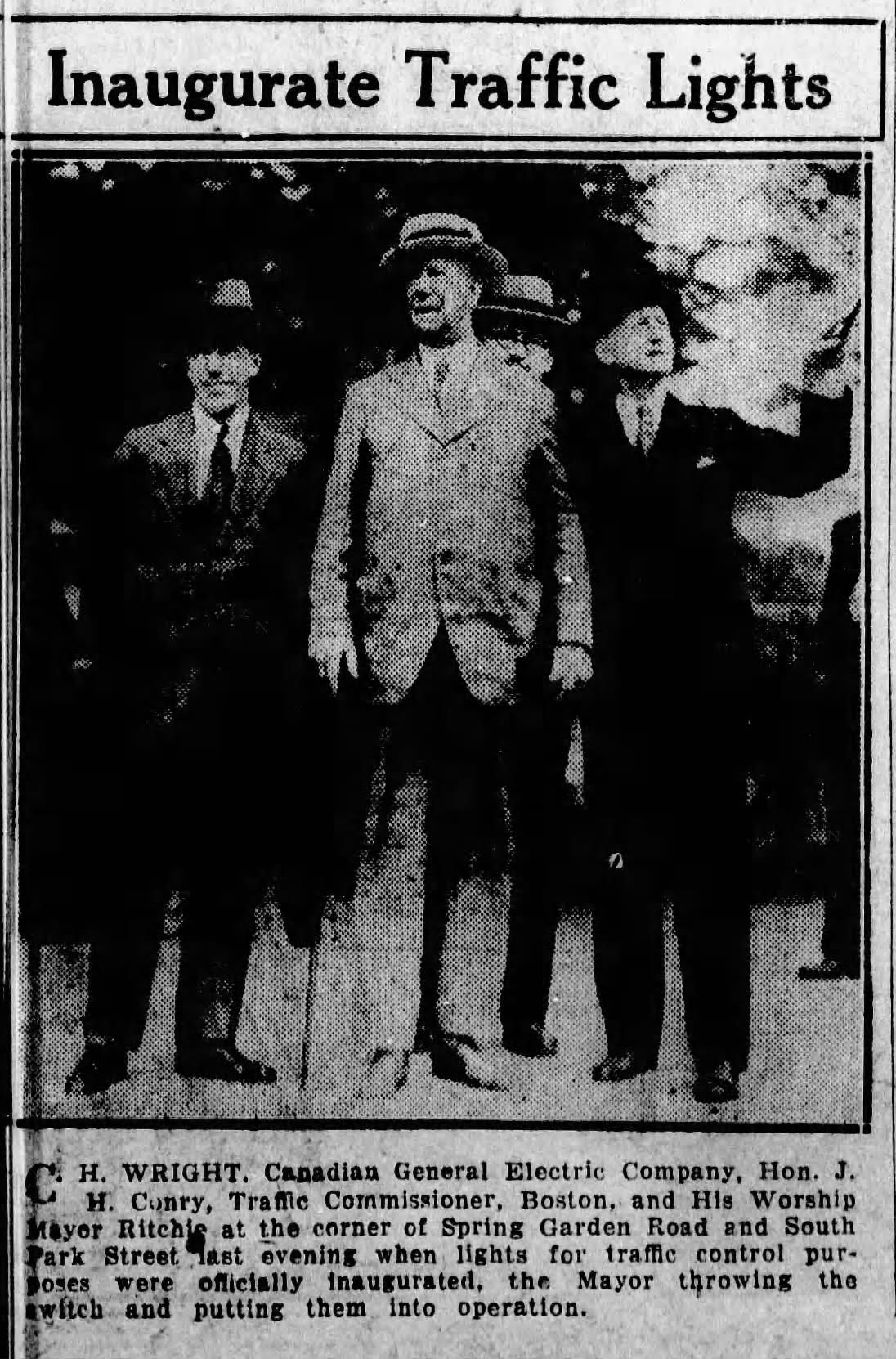
Seven men a day were stationed around the city, including Spring Garden Road at South Park Street.
And that is exactly where the first “traffic robot” stationed itself.