A St. Pat’s post mortem
It's been a year since St. Pat's was demolished. What was it like when it was abandoned?

Loss of historic school is still felt, says pastor
by Giancarlo Cininni
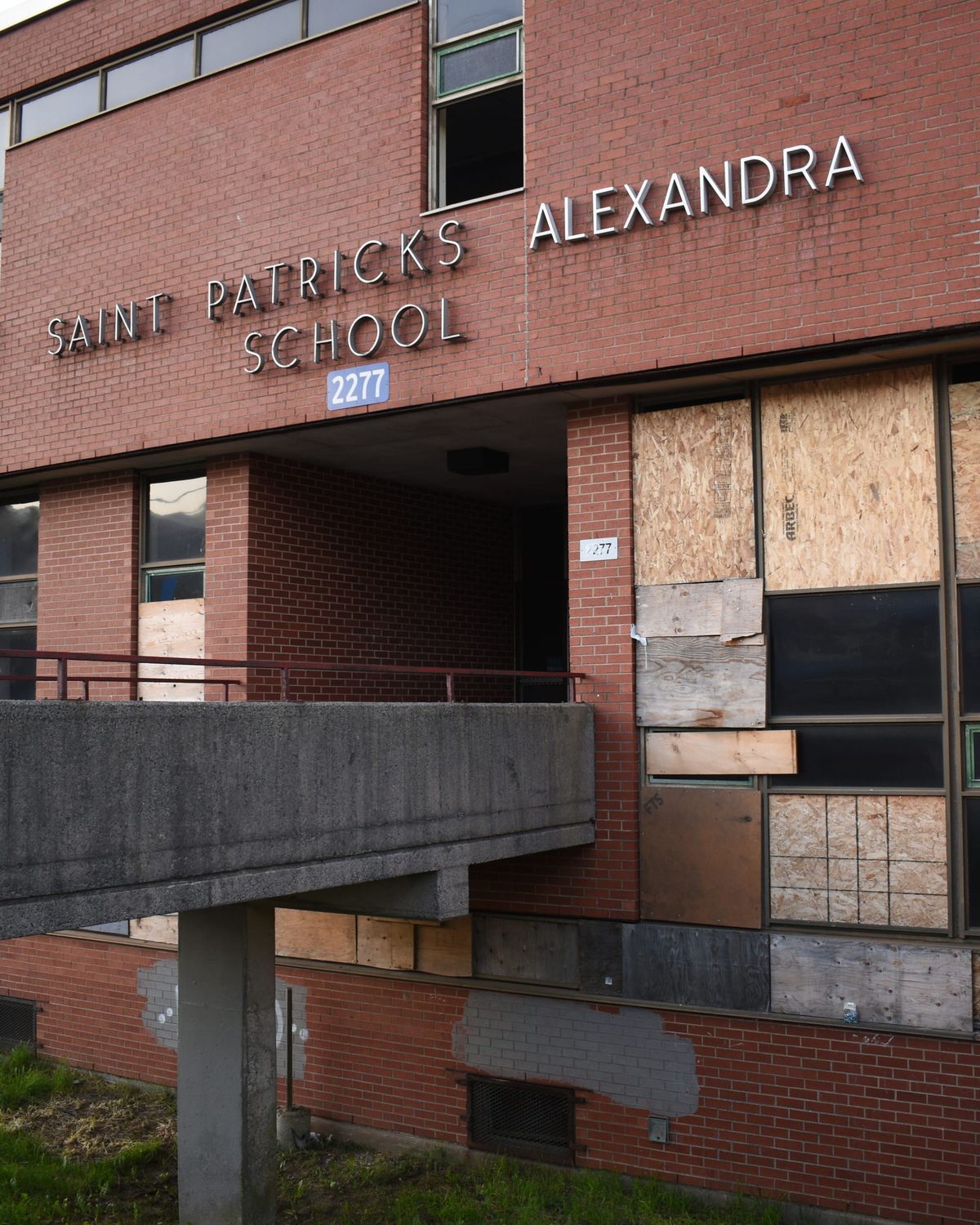
For 14 years, the old St. Patrick’s-Alexandra school sat like an empty tomb in the middle of Halifax’s North End. Closed in the spring of 2011, it withered until its demolition in June 2025.
Just over a year has passed since JONO Developments Ltd. violated its buyback agreement with the HRM. JONO had until April 25, 2025, to start building on the old site.
According to city solicitors via District 8 councillor Virginia Hinch the case has not yet gone before the courts so the hearing could still be a year or more away.
The decade-long court proceedings over buyback rights continues to delay development.
Residents of Uniacke Square will have to continue to wait for anything to be done with the empty plot of land.
JONO demolished the school in 2025 after multiple complaints about fire hazards and “public safety.”
Hinch wants affordable housing on the site. “It could be either with the province, or it could be with affordable housing groups,” she said. “There’s quite a few out there—especially in the African Nova Scotian community—that are looking to acquire land to build housing.”
St. Pat’s was built in 1921 and shuttered in the spring of 2011. It was one of the few Afrocentric schools in Nova Scotia, serving students from primary to Grade 9 from the mostly Black and immigrant working-class area in and around Uniacke Square.
St. Pat’s struggled to fill its 800 seats during the final years. In 2009, only 130 people were enrolled, and in 2010, only 80.
In 2009, the school board decided to close the school. As reported at the time by Michael Lightfoot in the Chronicle Herald, “St. Patrick’s-Alexandra not only had a declining enrollment to deal with, but ‘an image problem’ as an undesirable school to attend, board members said.” According to the board, the school was in a bad area of town, rife with drug-related crimes and sex work.
At the end of the school year in 2011, the city decided to sell the school to JONO Developments, which wanted to tear down the old school and build condos. The decision was unpopular with many in the community.
Shortly after the sale, it was found that HRM violated its own bylaws by selling the school directly to a private buyer rather than consulting community groups first to see if community groups could find a use for the site.
This led to a years-long Kafkaesque series of lawsuits involving JONO Developments, Community groups, and the city, which left the community waiting and the school deteriorating.