Halifax’s first councillors

And the mayor who lost his head
by Katy Jean
Halifax’s first election was held May 12, 1841 and Halifax chose its first Mayor, six Aldermen and twelve common Councillors, three Councillors for each of the four Wards.
In 1849, things changed slightly from Councillors electing the city’s Mayor, to the city at large electing the Mayor.
And Council has pretty much been the same since.
Except once. when Halifax didn’t have a city council for a bit.
As they do now, Councillors back then sat on different boards and committees, commissions and community councils.
One big difference between the first Councillors and today, is that they didn’t get paid.
In the first decade of 1900, Halifax’s population grew to 46,000 and Halifax started to wonder if the municipal government should change to deal with the population growth in the city.
A plebiscite was held, and the city voted to reform their government, and the legislation was changed and proclaimed by April 1913.
Gone was the government structure from 1841, replaced by a Mayor, a board of four Controllers, and twelve Aldermen. The Board of Controllers replaced the former committees of City Works, Police, Cabs, Finance, the City Prison, Laws and Privileges, Tenders, Charities, and Firewards.
The Controllers were elected by vote by the entire city.
They met three times a week with the Mayor and were paid a salary of $1,000 a year.
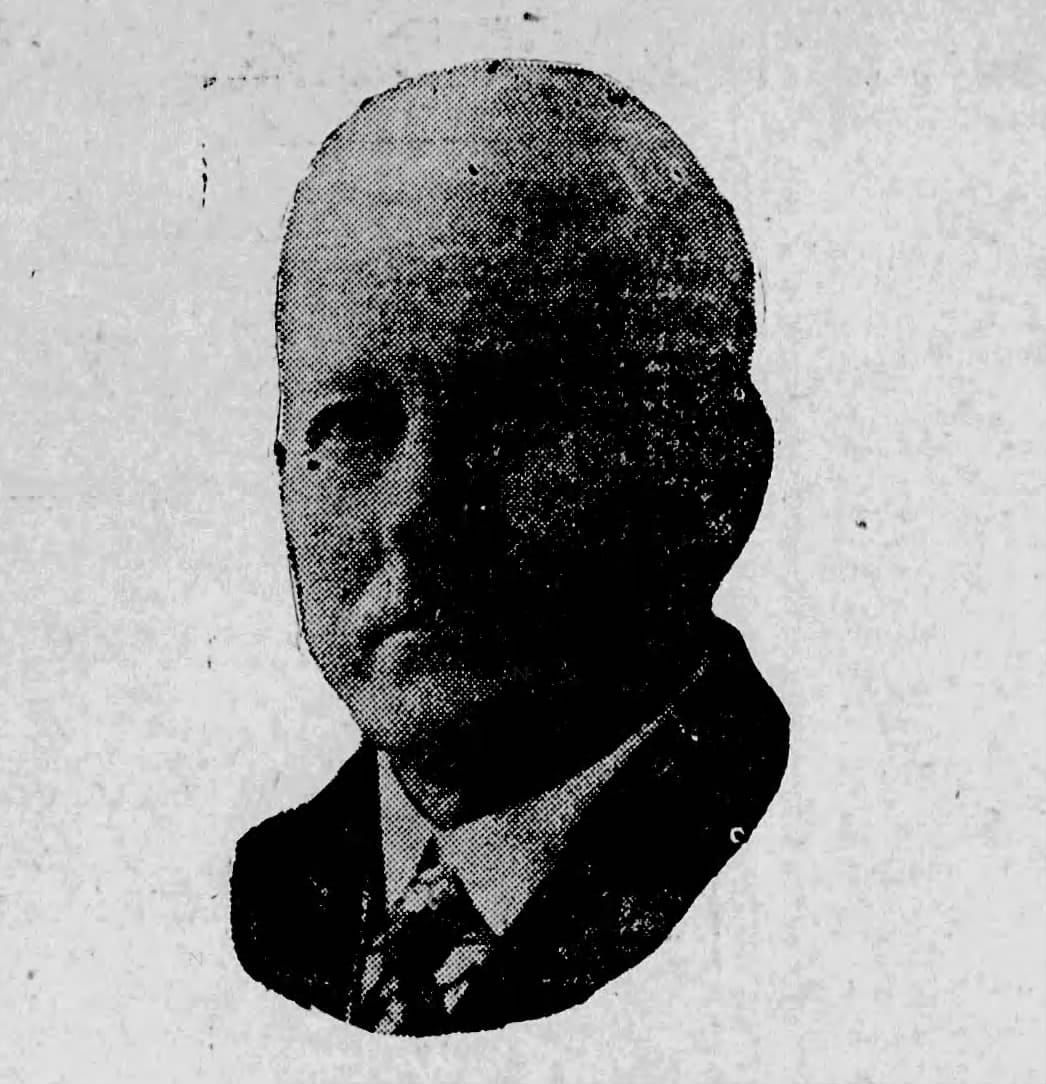
One Alderman, Dr. Arthur Charles Hawkins, respected physician of the city, very much protested the Board of Control era.
The alderman, still not paid, had much of their powers diminished or taken away. They also met less frequently and had less time to represent the needs of the community spending more time on the wants of Halifax’s businesses.
April 1918, Dr. Hawkins became the Mayor of Halifax. And after years of being silenced as an Alderman by the Controllers, he was about to start talking.
One of Hawkins’ main priorities for Halifax was dust.
The streets were dusty. Dirt roads and dry weather, mixed with the introduction of motor vehicles, had the city core in a dust cloud. People did not like this.
Hawkins ordered a water truck to sprinkle the streets during dry days to keep the dust down.
Halifax was dusty and had just been blown up and, whether a natural personality trait or not, it was obvious Hawkins was stressed out.
And this came to a head in August, 1918, when mayor Hawkins lost his head at city council.
On August 20, 1918, at the city council and Board of Control meeting the mayor had a list of “misdemeanours” he was demanding be investigated under oath.
The main issue was to do with The Patricia, the fire engine that had been used in the explosion.
La France, the manufacturing company, had first offered Halifax a temporary engine at no charge while they tried to “fix” The Patricia, the little fire engine that could... not.
The Board of Control and Councillors did not want the free temporary engine, instead got a better engine for $5 a day, for 120 days of temporary service.
This resulted in a $600 bill.
The Mayor was outraged. He brought down his fist and called the men in front of him “dough heads” He wanted to know who was responsible for not taking the free vehicle.
But what really got mayor Hawkins was the dust.
During a mayoral trip to Vancouver, the Board and Council had decided to sell his water truck without his approval.
“Well of all the dead men, damn fools and dough heads, that bunch that represents the city are the limit. After this board went to the trouble of trying to protect the city from the dust menace and the [water] motor in the city ready for use, they go and vote against its purchase,” he raged.
“The city should have an investigation to find out who was the instigator against holding the motor in Halifax. Without a doubt that is the worst outrage l have heard of since my return from the west.”
Hawkins was having a day.
The city and its Council and Board of Control were left stunned by the mayor’s behaviour and rage.
10 out of 12 Aldermen quit on the spot, demanding an apology.
Two of the Board of Control did the same.
The roads were dusty, the winter was coming, and Halifax didn’t have a city council for the only time in its history.
This led to a series of events where Halifax, once again held a plebiscite.
This time to abolish the Board of Control and return to the original Mayor, Councillor, committee model we know now. And eventually getting Councillors paid.
It worked. And has, for the most part, continued to work.
Council debates bike lanes, again
by Matt Stickland
A decade ago Halifax’s city council first approved its plan to build an All Ages and Abilities (AAA) bike network throughout the city. Last Tuesday, Council continued to debate whether or not they should actually implement the plan they approved almost a decade ago.
When the 50km bike network was first approved back in 2017, the plan was to kick in a couple million dollars a year and build the bike network out over a decade. If the city had stuck to that plan the bike network would be completed next year.
Instead, Council keeps debating whether or not they can save money on bike lanes (they can’t) but doing so adds delays, and as things are delayed, inflation does its thing.
For example, in a new cost of service dataset released by the city, we can see that in 2023 it cost $189 to fill a pothole and in 2025 it cost $441. In the same time period, our pothole filling budget shot up from just over $1 million to just shy of $5 million, a 243% increase. We only filled about 80% more priority one potholes with all of that extra spending.
But back in 2019 the city got good news! The federal and provincial governments were going to kick in money, $12.5 million and $8.25 million respectively. With a municipal contribution of $4.25 million we were going to get a fully built out bike network for $25 million by 2021.
Back in 2019, mayor of the day Mike Savage was quoted saying things like “Is it expensive? Yeah it’s expensive,” and “is it worth it? Yes it’s worth it,” and “And as much as anything else it puts a line in the sand and says come hell or high water, this city will be a cycling city and that is really important.”
But then COVID and its inflation came, and Council disagreed that becoming a cycling city was really all that important and prioritized trying to save money (we haven’t) instead.
For example, one of the ways Council was going to save money was by re-debating their bike lane plans to see if they could be done for cheaper.
Now, thanks entirely to council re-debating bike potential bike lane savings, in 2026 we have a woefully incomplete bike lane network and completing it will now cost at least $85 million and the next few sections might get built in 2028.