The e-scooter moral panic
There are a lot of headlines about how dangerous escooters are, but is the danger being exaggerated?

Kids are getting injured, let’s ban safe vehicles
by Matt Stickland
A moral panic is spreading in this province, swerving around the blind and the elderly leaving nothing but carnage strewn all over city sidewalks in its wake.
In response to this growing threat of children having a relatively safe mode of travel that grants them independence while saving parents from being a chauffer for their pre-teens, the provincial government has decided to ban e-scooters this fall when the new Traffic Safety Act is expected to be proclaimed.
Powered scooters have been around for 111 years with the first powered scooter the “Autoped” ripping around New York with an air cooled four stroke 155cc engine in 1915.
But the e-scooters that are familiar to us today are battery powered things that first started gaining popularity with the Xiaomi M365.
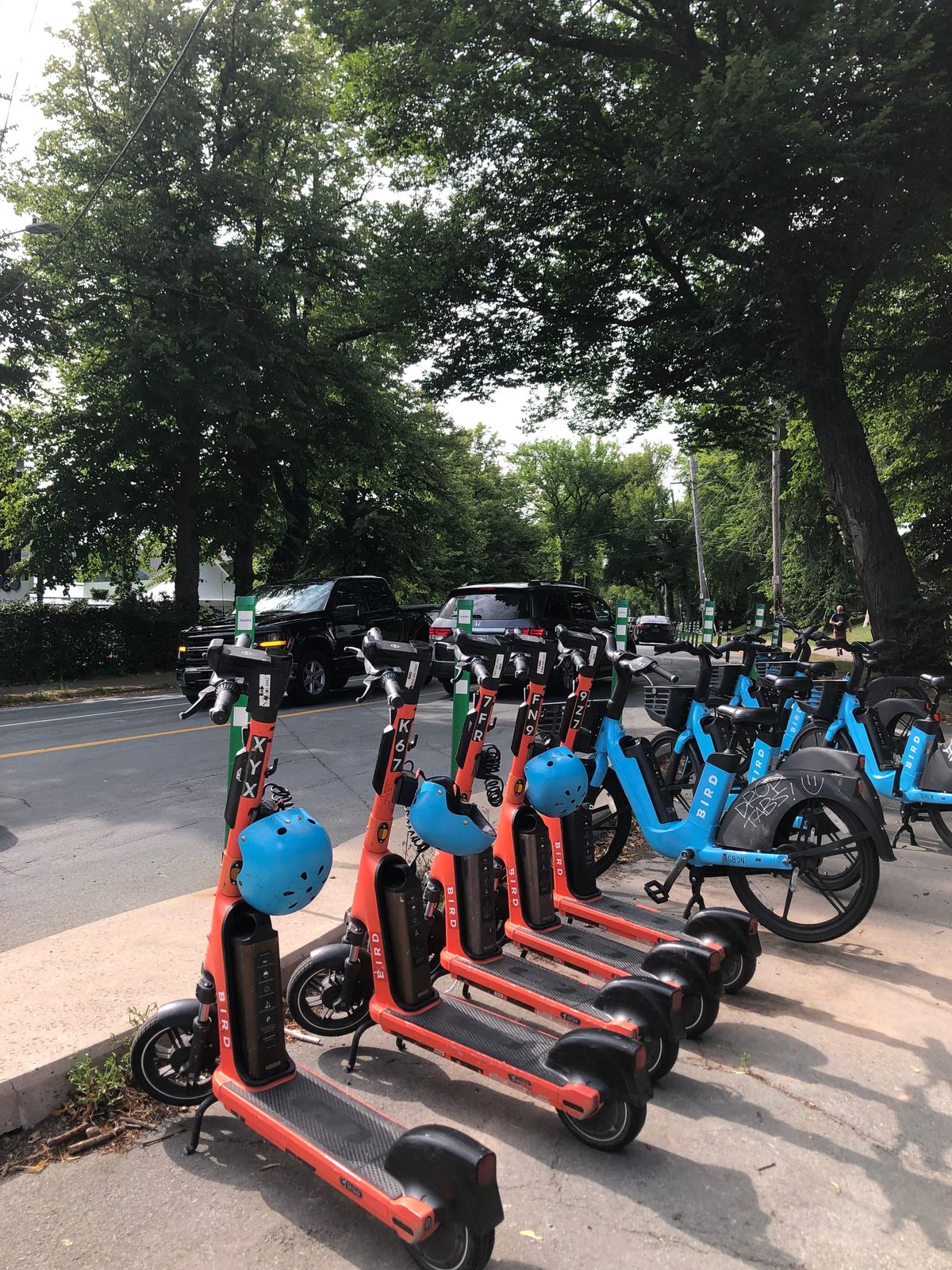
First invented in 2016, the M365 scooter rose to prominence in 2018 when they were painted bright colours and rented out by companies like Lime and Bird and left all over the sidewalks of Los Angeles and Miami.
There was a relative quiet on the scooter front after the 2018 L.A. and Miami scooter conflict, but ever since 2023 this mode of travel has had a resurgence in popularity because they are small and easy to store, cheap to buy and operate, they reduce congestion, are a far more efficient and reliable mode of transportation than the automobile, and most importantly: They’re fun.
Everyone looks like a bit of a wanker riding one, but it can’t be denied that they are very fun.
But the fact remains people are getting injured on scooters more than ever before.
Luckily this can be mainly attributed to the fact that far more people are riding scooters than ever before, which correlates to a higher number of injuries. And this is true for every mode of travel that has some level of risk.
For example, in 2020 when everyone was locked down in Halifax and nobody was really driving around, Halifax had its safest year on the roads in our data, with driving only causing 632 injuries and killing only seven people. Compare that to 2025 with normal traffic volumes and 1,000 injuries and 18 deaths.
The good news for scooters is that for the most part, riding one is incredibly safe compared with any other mode of travel except maybe walking.
In 2025 the Canadian Journal of Surgery published a study out of Edmonton that tracked scooter injuries from 2019 to 2021. Their study documented 759 scooter crashes and of those crashes only 5.5% required “direct admission to hospital,” and there were no recorded deaths.
Meanwhile from 2019-2021 according to Edmonton’s crash data 14 drivers died, 9 vehicle passengers died, 8 motorcycle riders died, 10 pedestrians died, and one bike rider died.
In spite of the far more kids being harmed by driving large media orginizations tend to push the story that scooters are dangerous mainly because injuries have grown exponentially due to the small number of injuries.
For example in recent reporting from CBC they’ve cited the results from the annual Canadian Paediatric Surveillance Program (CPSP) survey. Last year the CPSP surveyed 800 pediatric specialists in Canada in a one time survey of powered personal mobility device (PPMD) injuries; things like e-bikes, e-scooters, e-skateboards, e-unicycles, hoverboards, and motorized mobility aids. Of the 800 doctors surveyed only 34 reported dealing with any PPMD injuries and those 34 doctors reported 57 cases. In those 57 only 48 could be used and of those 48 cases only 14 doctors took the time to identified which PPMD their patient was using when they got injured. And of only those 14 cases 12 were on a scooter.
Even though the report does identify 26 injuries requiring a two day hospital stay, 12 that required intensive care and 10 that resulted in deaths, the report does not say how many of the 12 scooter crashes, were either hospital, ICU, or morgue trips.
Most recently the CBC has reported a doctor at Sick Kids Hospital in Toronto saying there has been an “exponential rise” in kids getting injured on scooters: 26 in 2023 to 46 in 2024 and 107 in 2025.
The city of Toronto tracks injuries that happen on their streets and according to their data there was one “micromobility” death and two serious injures in 2023, zero deaths and one serious injury in 2024 and two deaths and four serious injuries in 2025.
Not to imply that riding a scooter can’t cause injuries or can’t be dangerous, but in absolute and relative terms, there just isn’t any good data to suggest e-scooters are more dangerous than any other mode of travel.
Nova Scotia is planning to ban kids from riding e-scooters which will end up making more parents drive their kids places which is quite likely to cause more injuries and more deaths than if kids were just allowed to ride scooters and have some independence.
Spike in muscle ruptures in seniors
by Matt Stickland
Halifax’s senior citizens are being sent to hospitals en masse thanks to a massive new health hazard sweeping the nation. And at last week’s Community Planning and Economic Development Standing Committee council tried to help a local non-profit injure more of Halifax’s elderly residents.
The public health risk is known as “pickleball” and the people who play it, like councillor Tony Mancini, are self-described “addicts.”
First invented in 1965, pickleball languished in relative obscurity before blowing up in popularity in the past decade. So much so that a local pickleball community group wants the city to hold onto some land in Dartmouth for a regional pickleball hub.
The committee mentioned the benefits and popularity of pickleball but conspicuously silent about the harms.
A study out of Vanderbilt University about the public health crisis of pickleball published in 2025 tracked how many pickleball injuries occured in hospitals accross the United States between 2017 and 2022. The study found that pickleball related injuries grew faster than the sport itself.
Of the injuries reported, the most common was soft tissue rupture, followed by arthritis pain, and broken bones.
Proponents for pickleball will cite its “benefits” like: it gets seniors active and reduces the systemic healthcare burden of aging, but that is exactly where the danger lies.
The study found that when old sedentary people tried pickleball they were more likely to suffer injuries due to the risk trifecta of being old, out of shape, and new at a sport.
At last week’s meeting councillor Trish Purdy was the only to identify the harms of pickleball saying “I could break an ankle quite easily doing that.”
The committee decided to approve this plan to hold onto the land for a potential regional hub for Canada’s fastest growing seniors sport/public health crisis.
And if that happens Halifax can expect more seniors with broken bones and ruptured muscles.
Fillmore’s interests at conflict with city’s?
by Matt Stickland
Ever since the city was rocked by an expense scandal in the mayor’s office there have been questions about what council is going to do to prevent such a scandal from ever happening again. Council looked to the chair of the Audit and Finance Standing Committee Cathy Deagle Gammon to respond.
At last Wednesday’s committee meeting Deagle Gammon put forward a motion to “close the loop” on the Auditor General’s audit that started an RCMP investigation into mayor Andy Fillmore’s office.
Mayor Fillmore wanted to participate in the debate and amend the motion intended to hold his office accountable. In a statement Fillmore said his amendments were to identify “where a problem started” and “understanding how it happened, fixing every weakness we find, and making sure it doesn’t happen again.”
He did not take part in the debate because John Traves, the head city lawyer and signing authority on city legal expenses, told Fillmore he should talk to his own independent lawyer before trying to participate in the debate due to potential conflict of interest. In spite of being told by the city’s signing authority for legal expenses to hire his own lawyer, in a scrum after the meeting Fillmore said he was going to try and get the city to pay his legal expenses.
Ultimately Fillmore’s amendment was accepted by Deagle Gammon and was added to her motion. The amendments are fairly redundant as they ask for information that was already made public by the auditor general. For example one of Fillmore’s amendments sought to find gaps in approval, procurement, or other internal controls that led to an RCMP investigation.
Thanks to the AG report on the four expenses that could be deemed fraudulent, we have a pretty good idea of where the gaps in approval are and they mostly stem from Fillmore’s office. Except for the $90,000 report to restructure the mayor’s office. City staff advised against this restructuring, but were overruled by then CAO Cathie O’Toole who moved the mayor’s office out from under the CAO’s.
As for Fillmore’s desire to find out what corrective measures have been taken, well, that’s already underway as these transactions were referred to the RCMP for investigation.
During the debate, councillor Sam Austin noted that as soon as Fillmore’s office was restructured the “whole thing crashed into the ditch immediately.”
This report is expected to come back to Audit and Finance committee within two months and will be one of the first major decisions to cross the desk of Halifax’s new CAO Marnie Cluckie.
The Other stuff
Book club is (probably) meeting on September 19 at 2 p.m. at the 5k Café. We are reading Dark PR by Grant Ennis.
Did you know there is a podcast? This week, surprise surprise, it's all about e-scooters as well as a recap of what went down during last week's committee meetings.
Here is the paper for your printer at home
How did you do on last week's puzzle? Here's the answer!