Are fire numbers heating up in HRM?

by Jenna McConnell with files from Antonia Zwissler
Just over four months into this year, the sirens of fire trucks have been ringing through the air with alarming frequency.
In fact, HRFE has responded to fires more than once a day: 138 times to be exact. Only one of those was a false alarm.
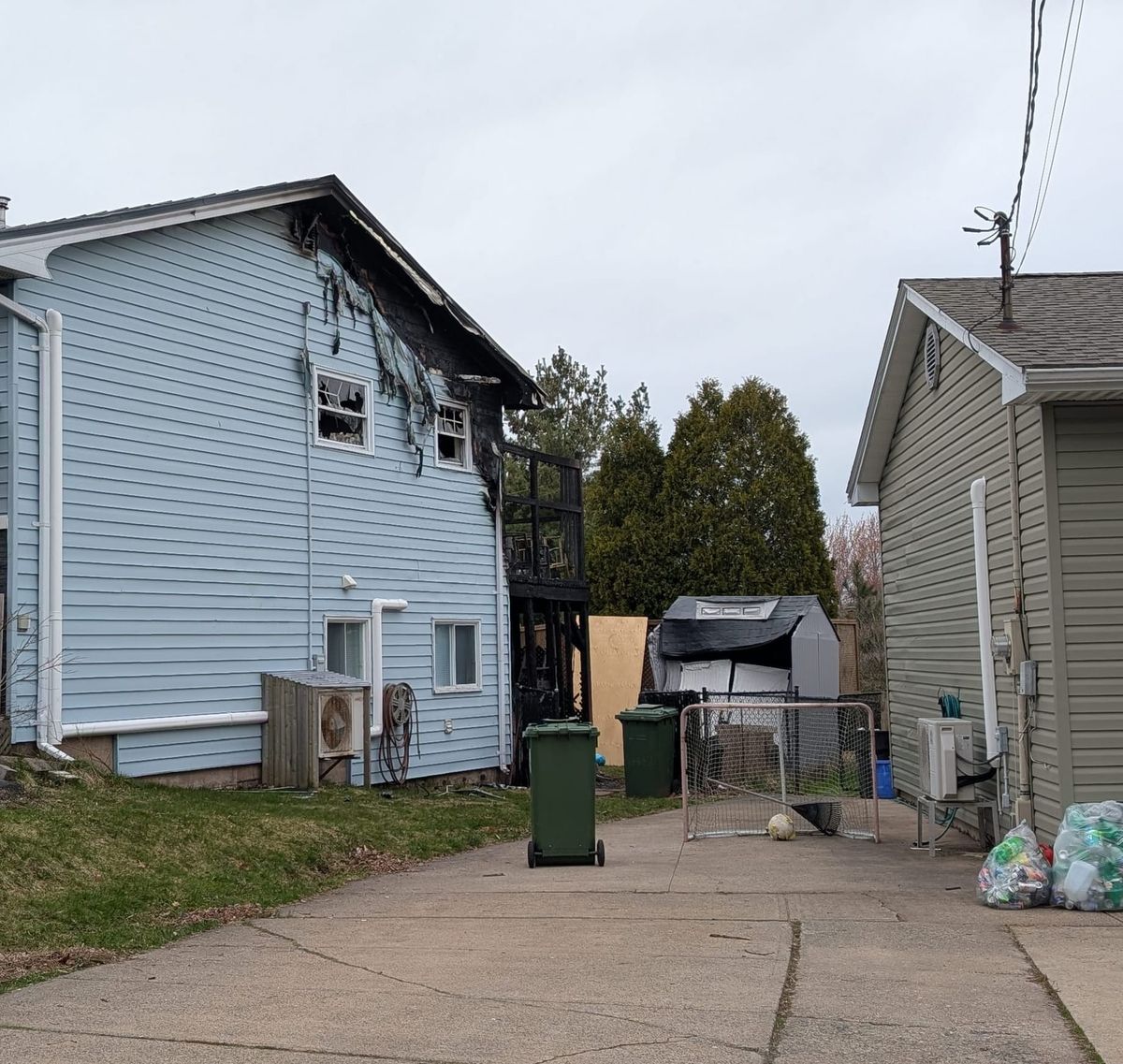
These fires can quickly turn deadly, as in the recent April 25 house fire in Lower Sackville that took the lives of three people.
Are there more fires?
Why does it seem like the whole city is a tinderbox, ready to burst into flames at a moment’s notice?
Has this spat of recent fires been caused by electrical problems, faulty equipment, or perhaps simply human error?
Does the Halifax Data, Mapping & Analytics Hub have the answers?|
Well, yes, the Halifax Regional Fire and Emergency (HRFE) data housed in the hub is broken down by different geographical boundaries than the districts we know and love.
Halifax has had the most fires so far, coming in at 30. Dartmouth was second with 24, and Bedford third, with 9. The other places had 6 or fewer fires, and thirty of them were one offs in places like East Jeddore.
As it turns out, there aren’t more fires. It’s probably a matter of recency bias.
According to the city’s open data, in the year 2025, from Jan. 1 until May 1 there were 150 fires compared to the paltry 138 as of April 23 this year. April 2025 was almost twice as flammable as April 2026, with last year having 45 fires compared to this April’s 22.
Perhaps this year the fires were just more memorable, or better covered by the press?
This likely plays a role, sometimes we miss things. So far about one in three fires this year, about 28%, have been vehicle fires, and there’s been nary a peep.
Mostly, the causes for fires in 2026 have been listed as “undetermined.” Fourteen fires have been caused by electrical circuits. Seven times the igniting object was a woodstove. One has been caused by “Children Playing (Age 1-11)” and one by “Youth Vandalism (Age 12-17).”
It seems that setting things on fire stops being child’s play and starts being vandalism at the age of 12.
But when it comes big fires, like the 2023 forest fire in Upper Tantallon, those incidents are much easier to remember.
Information on these fires is readily available, with news being updated live as the situation unfolds. We are told how big the fire is at the time of reporting, and where precisely it is located.
There are often daily briefings.
This makes some sense, as these types of fires are usually quite large and spread relatively quickly. They are often more dangerous and less under human control.
According to the government of Canada’s website, almost 7,000 large forest fires occur in Canada each year, burning an average of 2.7 million hectares.
Data on how many of these forest fires occur in NS is available. However, it comes in a huge block of text that is mind-numbing at the best of times. The data is not current, with only data up to 2023 posted.
The government of Canada’s website also says that lightning causes about 46% of all fires, but accounts for about 83% of the annual area burned. The site says the annual number of forest and wildfires has been decreasing in Canada, whereas the area burned by fires has been increasing.
HRFE’s annual reports and budget processes tend to focus on response times, fatalities, and inspection stats. These statistics are far more important to governing than how many fires were actually put out. That needs to be gleaned by counting the rows on the open data table.
The HRFE annual reports also don’t provide any concrete evidence of whether there actually are more structure and construction fires year by year.
But big construction fires have been all over the news lately, with at least one incident occurring somewhere in the HRM every week for at least the past month. Big plumes of smoke coming out of new construction sites give sexy visuals to talk about the housing crisis.
Nevertheless, in spite of fewer but more dramatic recent fires, firefighters are frequently in high demand in the HRM. The profession is chronically underfunded due to the land use and low taxes of Halifax’s city councils.
This underfunding has led to understaffing so dire that even if all firefighters were at work as scheduled in Lower Sackville, they are still two fire fighters shy of the city’s minimum response of 14 fire fighters (within 11 minutes). Although District 15 councillor Billy Gillis got 10 new firefighers hired last budget.
Not to mention all those drivers and congestion which is drastically reducing emergency response times.
It leads one to wonder how effective firefighting is in the city. Are we truly getting the value we deserve from our taxes?
White tries to make walking safer
by Matt Stickland
At April 14 council meeting, council passed some lacklustre amendments to the Administrative Order (AO) that is supposed to force construction companies to keep some version of a sidewalk accessible during construction.
At the next meeting on April 28, District 7 councillor Laura White put forward a motion to see about getting a policy that “maintains the municipal right-of-way (ROW) during building construction projects for pedestrians and/or people cycling/rolling/wheeling regardless of whether the sidewalk or bike lane on the opposite side of the roadway is open or not.”
Some councillors expressed trepidation because this motion could highlight the need to update the city’s construction mitigation AO more broadly instead of just what White’s motion was asking for.
One of the big concerns with White’s motion came from mayor Andy Fillmore who said that the motion should be updated, but with input from industry and that this motion made him “think of the provincial government making rules for surgeons in the operating room without talking to surgeons.”
Some version of the provincial Medical Act, which is how the provincial government regulates surgeons, has been in force since 1872. When this act needs to be updated, as it was in 2014 it is done in consultation with College of Physicians & Surgeons of Nova Scotia. This consultation at the provincial level is done between second and third reading of the new legislation during a stage known as ‘the committee stage.’
At the city level, the committee stage equivalent happens between when councillors ask for a staff report and when the staff report comes back. Acting CAO Brad Anguish told council that “we wouldn’t bring back a report that’s uninformed by development. That would be leading us down the wrong path. So that goes as part of the report work.”
Mayor Andy Fillmore voted against council using their democratic report process to update city regulation, saying twice that his vote was due to a lack of industry involvement in crafting White’s motion for her.
Fillmore kicks off budget season six months early
by Matt Stickland
Even though Halifax is only one month into its newest fiscal year, council has started preping next year’s budget 11 months before the budget is due.
At last Tuesday’s council meeting mayor Andy Fillmore put forward a motion instructing staff to keep the city’s budget the same throughout the year except for “increases for inflation, contractual commitments, mandatory provincial contributions, and items approved by Council.”
This motion is the same one Fillmore passed last year and is the evolution of his campaign promise to keep the tax rate flat, a promise that became harder and harder to keep once he learned the reality of the city’s financial situation.
“I think this is good,” councillor Sam Austin told his colleagues in support of Fillmore’s motion. The motion instructs staff to keep the status quo, or what council approved in the last fiscal year’s budget, as the starting point for debate of the next year’s budget. “I think this is an entirely appropriate starting line to go with, and then from there on it’s up to council.”
This motion passed with only councillor Laura White voting no. White said she voted no because she felt the city needed more investment, meaning to spend more money, so holding the line on spending should not be the city’s default fiscal policy.
The city’s next budget season which should kick off officially later this year, is shaping up to be a consequential budget in Halifax’s history as multiple large strategic plans are expected to launch this summer or in the lead up to the start of budget season in November.
Halifax’s suburban development is a massive fiscal liability, which is a net negative on the city’s finances. This summer, Halifax is expected to pass a new suburban plan, which is expected to allow more density and uses in the suburbs, which should increase the city’s revenues while decreasing expenses.
There is a new municipal service update expected this summer that will clearly define what is and what is not a municipal responsibility. This will impact the HRM’s budget because it will change what we pay for.
And there is also a tax and fee rationalization motion from Fillmore from last year, which has instructed staff to come up with new, non-tax ways to generate much-needed revenue.
All in all the upcoming budget season, which is expected to formally start in November, is already shaping up to be one of the most consequential budgets in our city’s long history.
The Other Stuff
There's a new podcast out wherever you get your podcasts. There's an easy way to include spotify links which is why I always include them but the fun thing about RSS feeds is that you can catch them basically anywhere.
Are you doing the crossword at home? Just like feeling a paper in your hands? Here is the pdf for your printer at home.
How did you do on last week's puzzle? Here is the answer!