Beauty and the bitch

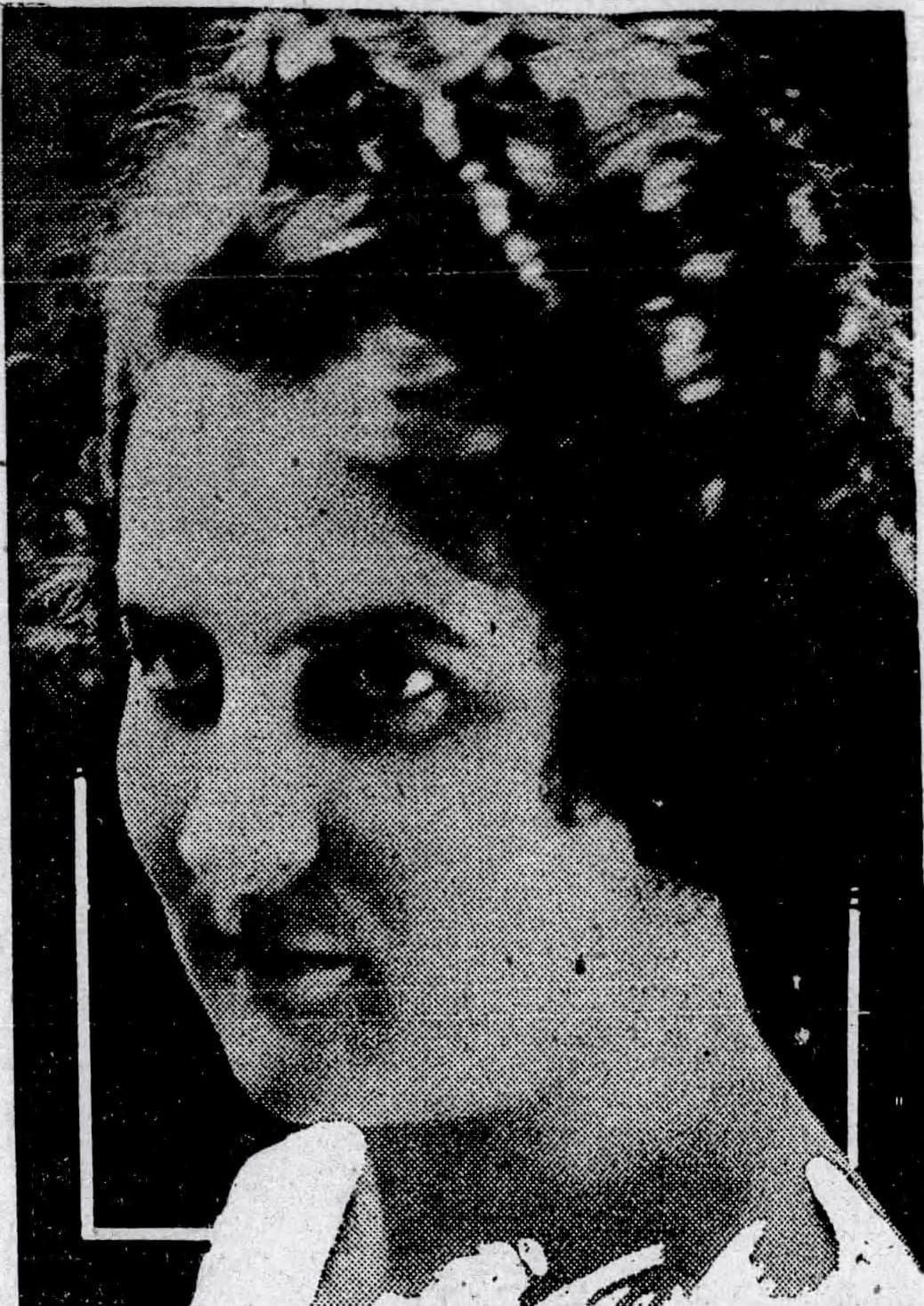
A Halifax beauty queen who won best in show
by Katy Jean
Beauty is beauty. Dog is dog. But who tells you which is which?
Who told you what was beautiful a hundred years ago? A time before screens of various sizes lit our faces at home, swiping left or right on someone’s photo was reserved for magazines and catalogues.
Silver screens introduced us to a standard. Moving pictures without audio introduced us to how we could look or move. Beauty became Mary Pickford and Theda Bara.
Outside of buying a ticket to see what pretty was supposed to look like, we had neighbours.
Who was the prettiest girl in town? What made her pretty? Who had the best dog? Who dressed fashionably? How did we determine that?
In the winter of 1923, Canada prepared to set a beauty standard with a competition to name a “Miss Canada.”
And Halifax had a girl in the running.
She would define beauty as beauty. And later dog as dog.
On December 19, 1922, The Evening Mail announced that they, along with an impartial jury, would choose one girl from Halifax to attend the 1923 Montreal Winter Carnival. The selected girl would be named “Miss Halifax.” And be given the opportunity to compete for the title of “Miss Canada.”
The lucky lady would be sent off with all expenses paid and dressed in Halifax’s finest clothes.
DeNigris of Barrington Street put forward a turban and choker of squirrel skin, L Sterns and Sons of Dartmouth would give her a wool coat, moccasins and slippers provided by Wiezel Bros, toques and mittens from Cabot’s Dry Goods and a whole lot more with a team of tailors to ensure she wore it best.
A jury of nine respectable Haligonians including the mayor, a military major and a president of the Women’s Temperance Society were set to pick the prettiest girl.
“Miss Halifax” would need to be pretty. And know how to skate.
On January 17, 1923, the women and girls, jury and audience gathered at The Halifax Arena for the competition during The Great Skating Party.
Following a brief hockey game between Halifax and Dartmouth and a display by Mrs. Hebb, a woman celebrating her 60th birthday who sewed the sails of the Bluenose, sailed across the ice with her skill of “fancy skating.”
One hundred women and girls wearing numbers on their sleeves put their best face and blade forward.
The judges narrowed the number down to four.
The vote for Miss Halifax became unanimous.
Halifax’s standard of beauty was decided.
Her name did not start with Ms., but Mrs.
Mrs. Helen Doherty received the title of Miss Halifax.
Helen had just celebrated her 23rd birthday before taking a skate at the opportunity.
The Evening Mail described Helen as such:
“Tall, graceful, with a striking carriage, ‘Miss Halifax’ is an all around athlete, being proficient in tennis, swimming, skiing, tobogganing, snowshoeing, skating, horsemanship and dancing. She is of the true brunette type, a cultured young lady, and will be in every way a thoroughly satisfactory representative of her native city.”
With as many commas as skills, Mrs. Doherty (formerly Mitchell) was a true winner.
With her mother and a representative from the Evening Mail, Helen was on the express train to Montreal just two weeks after the skate.
In her trunk, she had her tailored outfits, furs and wools, a set of snowshoes, and a brand-new pair of shiny Starr Manufacturing skates.
When she arrived in Montreal, Helen prepared to meet the other Misses. “Miss Winnipeg,” “Miss Quebec,” “Miss Regina,” “Miss Montreal,” “Miss Sherbrooke,” “Miss Edmonton,” and “Miss Saint John.”
Only one would be “Miss Canada.”
Helen didn’t take home the title. That went to Miss Sherbrooke.
But that didn’t stop her from winning best in show.
A year later in 1924, Helen’s bulldog, Dunalaunt, took over kennel clubs across Canada, beating out American dogs who had won national competitions at New York’s Madison Square Garden.
The next year, Dunalaunt would head to the Westminster Dog Show.
He was described as “a most massive fawn pied heavyweight with enormous bone and shoulders, pear shaped body, a head piece that is a study in upsweep of underjaw, lay back, wrinkle, ears and expression, perfect feet, short screw tail and a marvel of activity and power” by the Canadian Kennel Club.
Again, at the height of competition, there was no crown. But he was a very, very good boy.
Helen continued breeding her dogs and was handed the title of best bitch dozens of times.
Helen died a widow in 1941.
CPED approves seniors strategy
by Matt Stickland
Getting old sucks in general, but it sucks even harder in the Halifax Regional Municipality.
The issue at hand is that a lot of people bought homes in “communities” full of single-family homes and car dependency in their youth or midlife, but as they age, they find themselves unable to drive a car and living in a single-family home with limited or no friends and family in their local hostile to walking neighbourhood. This is creating a bit of an epidemic of older Haligonians suffering from isolation, loneliness, and depression in their “golden years.”
Active people are also less of a strain on the healthcare system. That’s why staff were tasked with putting together this Seniors Recreation Service Plan last Thursday. When doing consultation for the plan they also found that older Haligonians often need programming better suited to their stage of life, either with recreation that is maybe a bit easier, like chair yoga, or programming that allows their caregivers to participate.
Staff also heard from older Haligonians that they often wanted to socialize with their peers after doing a group recreation activity, but that frequently isn’t an option. During the Community Planning and Economic Development committee meeting last week councillor Kathryn Morse pointed out that a lack of facilities often hinders the city’s ability to provide good recreation activities. She said that in her district the only real community centre is an arena, so putting seniors programming with a social aspect together in a rink would be pretty challenging.
The Seniors Recreation Services five year plan in its current form is less of a plan and more of a framework with five “Strategic Visions” staff hope to achieve by 2030. Things like conducting an audit of public spaces, increasing awareness of current programs, and tweaking current programs to better match seniors’ schedules.
This was sent to council for approval, and should council approve it, various seniors pilot projects will be up for council’s consideration in the upcoming 26/27 budget season.
Halifax’s favourite property tax myth
by Matt Stickland
The State of the Municipality address was last Wednesday. It’s an event put on by the Halifax Chamber of Commerce, open to all who wanted to pay at least $149.99 to attend.
Nothing of consequence ever happens at these luncheons, but every now and again they’ll offer some insight into why Halifax is the way it is.
This year, deputy mayor Patty Cuttell was also invited to participate in the mayoral State of the Municipality address, and in a scrum after the speeches she was asked about the challenges ahead for the city. And in response to that question Cuttell said one of the city’s fiscal challenges is that “property taxes were never designed to pay for major infrastructure.”
But this raises the question: if property taxes aren’t designed to pay for major infrastructure, and if council can only raise money with property taxes, why did they choose to build so much major infrastructure in the first place?
It is easy to hear the term “major infrastructure” and picture things like the ‘new’ central library, the Canada Games Centre and the Windsor Street Exchange. But according to our budget “major infrastructure” is way more than that.
One of the big reasons mayor Andy Fillmore has voiced opposition to the bike network buildout is that it is a piece of major infrastructure with too high a price tag, and we simply can’t afford the $2,500 per meter the bike network is now projected to cost. However, if $2,500 per meter is unaffordable for the city, why did we build out over 3 million kilometres of car lanes, which cost us $12,452.23 per meter to fix last year? Is the problem that property taxes are not an effective tool to pay for major infrastructure? Or is the problem that council, through land use and infrastructure choices, have made property taxes into an impotent fiscal tool?
One of the city’s recent major infrastructure builds, the Halifax Central Library, when it was built in 2014, cost the city $57 million. In 2014, Districts 7, 8, and 9, the primary beneficiaries of the ‘new’ library, generated an estimated $179 million in property tax revenue, with about $65 million of that being a surplus.
It is not accurate to say that property taxes were never designed to pay for major infrastructure projects.
With land use by-laws that allow density and $2,500/m transportation lanes instead of $12,452.23/m ones, property taxes could easily pay for the major infrastructure projects Halifax needs.
Council just doesn’t want to.
The Other stuff
This newspaper has a book club! The new book club book is Saving Ourselves from Big Car by David Obst. Time and date of the meeting still TBD, expect late June/early July.
Did you know there is a podcast? This week I went deep on property taxes and my interview with Cuttell. You got a preview in the story above.
Here is the paper for your printer at home
How did you do on last week's puzzle? Here's the answer!