Property taxes must go up

It’s the only way to make housing affordable
by Matt Stickland
You may not realize it, what with the houses, shops, roads, and people, but if you live in Halifax, you don’t actually live in a city.
This is not because most of Halifax by geography is rural. Nor is it because most of what we’ve built in the HRM is suburbs.
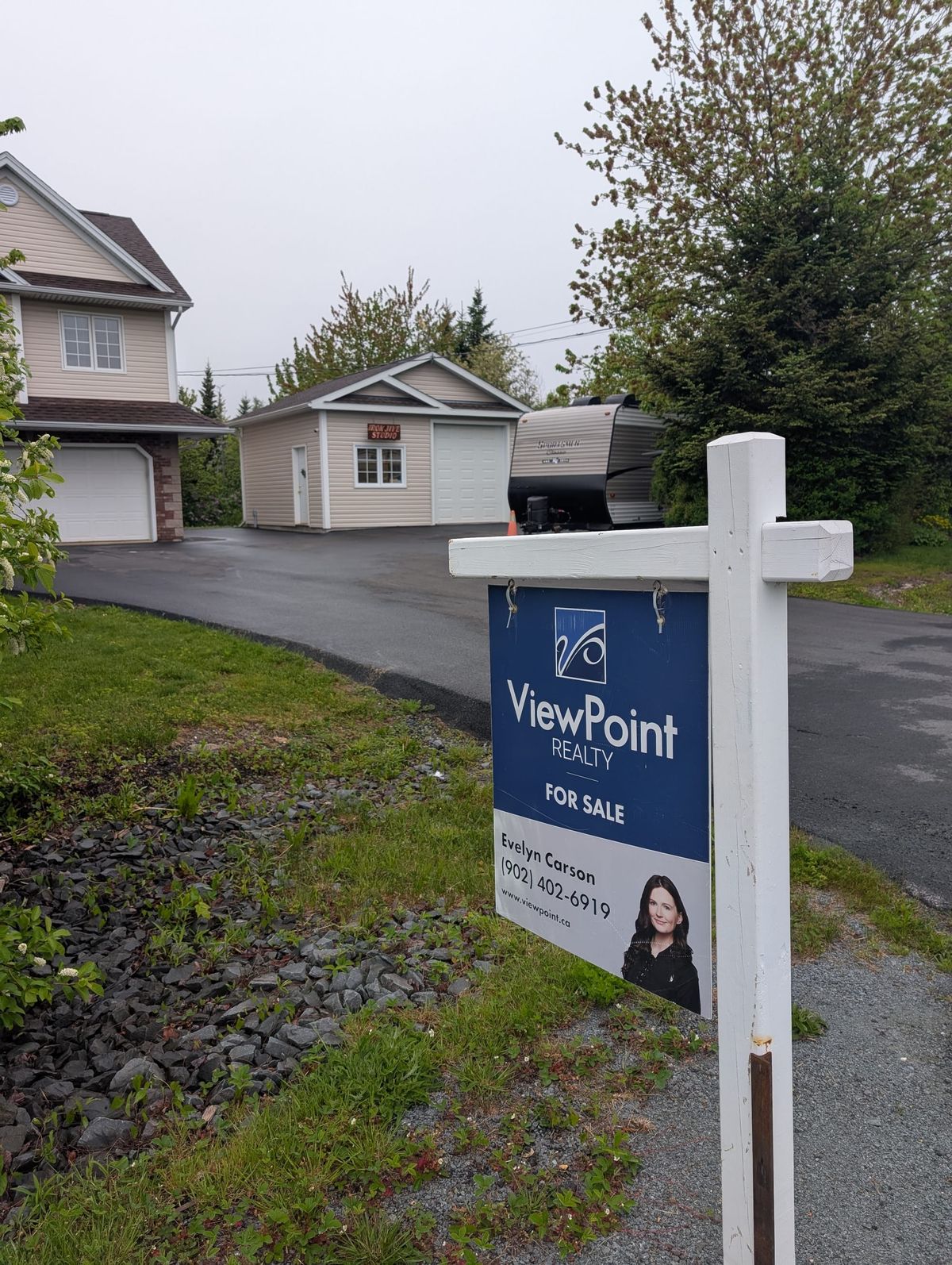
It’s because if you live in Halifax, you live in a housing market.
This is unfortunate because most people—voters, councillors, and even tourists, seem to think Halifax is a city. And this misconception affects the way people plan their lives.
For example, most European cruise ship passengers plan their trips around seeing famous landmarks like the Citadel or Peggy’s Cove lighthouse instead of planning a trip to enjoy Halifax itself. Halifax the commodities market where council has used its regulatory power over the housing market to erode housing affordability is not as big of a draw as a lighthouse built in 1915.
To be fair to Halifax’s council, they are not alone in the blame.
Some blame goes to the federal government. Even though the feds have had some good policy which should increase housing affordability like the Housing Accelerator Fund program, they are more concerned with the economy as a whole.
And the real estate or housing sector is a huge chunk of the Canadian economy. From construction to real estate investment (meaning buying and selling property), housing makes up about a third of Canada’s GDP. This is likely why the feds have tried to make housing more attainable instead of more affordable, giving home buyers access to more money to buy existing housing instead of building out more housing units.
Things like the Home Buyers’ Plan that allows Canadians to use their RRSPs to invest in the housing market, or the First Home Savings Account which allows Canadians to save more money to invest in housing.
The provincial government in Nova Scotia has been a bit of a mixed bag on this front. John Hamm’s Tories introduced the Capped Assessment Program back in 2005, which has made housing less affordable, but Tim Houston’s Tories froze development fees in 2023, which should make housing more affordable.
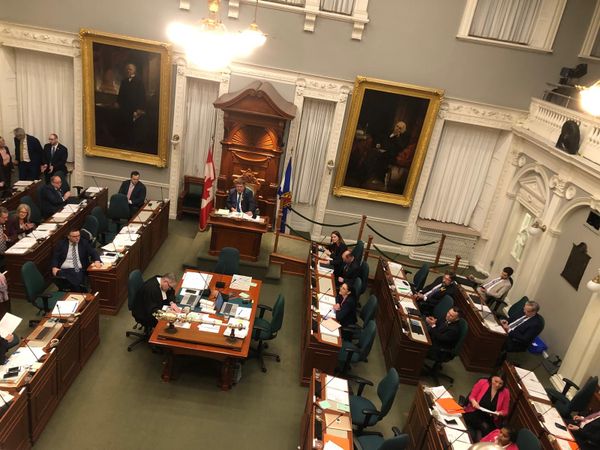
But the main culprit for why housing is so unaffordable in the HRM is Halifax’s city council. And in order to understand how they are doing this, we need to think about Halifax as a housing market instead of a city: your city councillor is 1 of 17 people with almost absolute power over what commodities exist on the market, and they also have almost absolute power over how much (or little) it costs to make money investing in Halifax’s real estate market.
The way Halifax regulates the commodities on the housing market is through land use by-laws. Land use by-laws dictate how much housing stock(s) can be built and how easily. Now, if council wanted to drive down the cost of housing stocks they would allow more density by relaxing lang use by-laws. This would allow more housing shares to be introduced into the market and flood it with new housing. Council has historically chosen to restrict the supply of housing with land use by-laws that only allow low-density single-family housing shares. This drives up the return on investment for people who already own single-family housing shares, which makes this policy very popular with existing landowners.
Council could make it more punishing for people who weren’t also invested in the city to invest in the market. Owning a share of housing in Nova Scotia right now comes with very low management fees, brokerage fees, or account fees. Because the only fee to hold onto your housing share in Nova Scotia is property taxes. And thanks to premier Hamm in 2005, those fees get proportionally cheaper the longer you own your home.
For example, if you bought a house on the Eastern Shore for $160,000 in 2011, that house is worth about $560,000 in 2026. This is an increase of about 15% per year in your housing investment portfolio. After deducting the management fees (i.e. property taxes), that is still an increase of about 15% a year for less than $30,000 in fees.
In traditional savings vehicles like mutual or indexed funds, investors can usually expect their investment to grow by about 7% per year. For comparison, on a $160,000 investment over 15 years in the traditional market at a 7% year over year return and 1% management fees, the portfolio would grow to about $380,000 after paying almost $40,000 in fees.
With double the returns and lower fees than traditional investments, housing has become a huge investment market that is very attractive to institutional investors. This drives up the cost of housing for everyone in the city.
And although that is good for existing housing shareholders, it also means any Haligonian earning an average salary of about $56,000 a year will never be able to buy into the housing market unless council increases supply or raises the management fees.
Body cams coming to the HRP
by Matt Stickland
The city’s plan to equip the Halifax Regional Police with body cameras is slowly but surely coming to fruition. Body cams are already in Halifax–the RCMP’s H Division has been rolling out the cameras since late 2024.
“Wish we had them 20 years ago, 30 years ago,” chief superintendent John Duff of the RCMP told the Board of Police Commissioners last Wednesday. He called the cameras an excellent tool that were a “very, very positive” addition for the RCMP.
Body cams were approved by the board and then council last budget season. The first step is to install the Digital Evidence Management System (DEMS) and hire one DEMS supervisor and nine DEMS clerks. Pramod Pulugurtha, who HRP chief Don MacLean and the rest of the HRP call Henry, is Halifax’s DEMS supervisor and was hired two months ago.
Even though body cams are expected by the end of the year, the first step is to install cameras in cop cars, and that process started in May this year.
Some commissioners expressed concern that the HRP’s camera network was being installed and brought online before there was policy in place to govern their use.
The board’s policy guy, Josh Bates, told the commissioners to expect the body cam policy in July.
Commissioner Tony Mancini told the BOPC that there has been work going on in the background to craft policy in time for when body-worn and in-car cameras start surveilling the streets later this year.
One of the obstacles in crafting policy for the cameras is that part of the policy document will have to describe best practices and workflows, the latter of which won’t be fully understood until DEMS is up and running.
The vendor, Axon, will provide training to the HRP officers on how to use their body cams, and those cops will then train other HRP officers.
Halifax’s Subcommittee on Defunding the Police recommended against buying body cams as there is little evidence to suggest cameras improve police accountability.
Aftermarket Axon body cam “privacy covers” are available for purchase on the internet for $20.
Halifax Regional Police need new HQ
by Matt Stickland
The Halifax Regional Police need a new headquarters or three, and thanks to a motion from commissioner Becky Kent from February 2025, work on the new HQ is underway, kind of.
The first step in the process is an evaluation of the police’s needs and scoping out three sites to determine whether any are suitable for a new police HQ.
The city put out a tender to get a private company to do this work, and Republic Architecture from Winnipeg was awarded the contract of doing the needs and site assessment.
They are looking at the current police HQ on Gottingen Street as well as looking at the property that is currently Centennial Pool. They also are looking at 375 Cowie Hill Road, which is currently owned by Halifax Water, and a place on John Savage Drive in Burnside.
Due to the size of the HRM and the scope of current HRP operations, it is likely that cops will need all three properties (or alternatives) to be turned into central or regional HQs.
So far, the city has budgeted $1.7 million for things like consulting on which sites should be considered for the new police headquarters, paying the architecture firm, and supplementary investigations. As well as $750,000 on repairing the existing police HQ.
Overall, the new HQ is projected to cost $180 million, but design work is not expected to start until the 2029/2030 fiscal year.
Commissioner Tony Manicini is already worried about the price tag. “When we’re going to go to council and say we need $180 million for a new facility, a major headquarters, it’s going to be a problem. Without question it’s going to be a problem. You know, we look at the challenge that we’re having with the Forum. And I know it’s apples and oranges, but that’s the reality of it.”
But the reality is that apples and oranges can be compared, and in some circumstances they have to be compared, even if they are different fruits.
For example, if someone is grocery shopping and has a limited budget because they rely on a single source of income. But they do need to make lunches for their kids, and they can only afford to buy one of the two fruits because of their low income. And in spite of the differences between the two fruits, a choice will need to be made.
So even though there will be differences between a police HQ and whatever other infrastructure the city needs in 2029, council will need to make a choice about which fruit they like more to buy with their limited income.
Or they could raise property taxes and get both fruits.
The Other stuff
Book club is meeting Soon™. The time and date of the meeting will be in the next issue of the paper and episode of the show. We are reading Saving Ourselves from Big Car by David Obst.
Did you know there is also a podcast? This week's show is a deep dive into property taxes. Can you see the embedded link below? I think something funky might be going on, please let me know!
Here is the paper for your printer at home
How did you do on last week's puzzle? Here's the answer!