Forum’s 109 years of debate
Another delay? For… Um… What purpose?

by Katy Jean
The Halifax Forum entered its 98th year over the winter.
But the argument about its costs and purpose entered their 108th year at the same time and are poised to continue even longer.
The Forum started as a replacement of the Provincial Exhibition Building destroyed in the Halifax Explosion in 1917. And ever since, it has been cursed by price tags, questions of service, and threats of closure.
After the destruction of the Provincial Exhibition Building, a small covered ice rink was built while city council and the province argued over what to do with the property.
Everyone agreed the space should remain public. But it shouldn’t be too expensive.
But the project became more and more expensive the longer it took a few good men to agree on the budget.
Eventually, in 1926, alderman Louis Gastonguay suggested the budget should be $150,000 for the new grounds and buildings that would include ice rinks, a horse racing track and stables, an industrial building, and general exhibition facilities.
When the building was finally done in 1927, a decade after the explosion, it came in over budget at $373,804.
The brand spankin’ new Forum put out a call to boys 8-14 to come and play hockey on the first artificial ice surface east of Montreal on December 27, 1927.
A public skate that over 1,000 attended was held with a live band (a regular feature at public skates back then).
The first official hockey game was played, 40 minutes late, between the Crescents and the Canadian National Recreation Club. It was remarked that the game went very fast due to the perfection of the artificial ice.
Dartmouth’s natural rink failed to freeze that year.
The Forum officially opened its doors in August 1928 with exhibitions, horse racing, and vaudeville acts.
It was the place to be. Until the war.
The Department of National Defence wanted the Forum and Exhibition Grounds land. It needed training and housing space for soldiers. The city and the entire country wanted to help “the boys” in any way possible, unless the feds were only offering $150,000.
Halifax wanted $800,000 for the Exhibition Grounds and all of its buildings.
The federal government counter offered $250,000. The city held a vote on what to do with the offer. Against the provincial government’s wishes to give up the property, the offer was rejected.
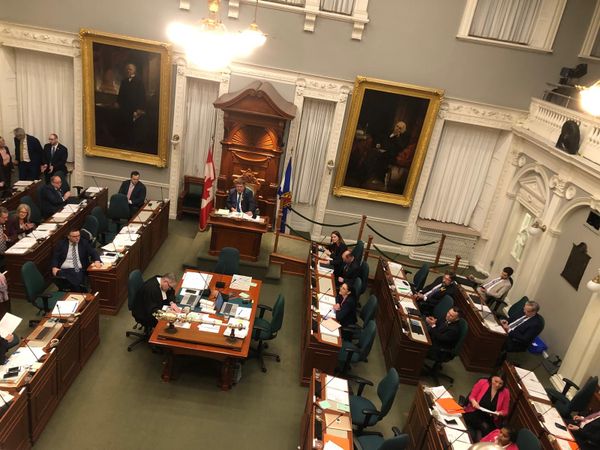
A special meeting was held to vote, again, on the fate of the Forum.
The vote in 1940, like the one last week in 2026, came to a deadlock with 8 votes for and 8 votes against.
The forum was sold, as decided by the mayor William E. Donovan’s tie-breaking vote.
The military tore down many of the buildings to create housing and training facilities. Though the brick Forum building remained for dances and recreation, for morale and soldiers’ socialization.
After the war the federal government had no use for the property or buildings. So the city bought it back, tore down most of what the military had built, and restarted the skates and exhibitions.
The Forum was doing well, it added a new rink, attracted popular artists, was home to local hockey teams, boxing matches, and circuses, to name a few highlights. But the activity faded.
The grandstand was torn down, the horse track and stables left. In 1978, a huge parcel of land was sold off to Canada Post to make a hub sorting facility for Atlantic Canada.
And then in the heart of downtown Halifax, a few blocks of affordable housing were bulldozed and up went the Forum Killer - The Halifax Metro Centre.
The Forum, which had attracted Johnny Cash, KISS, The Bee Gees, Ray Charles, and countless others, couldn’t offer the largest capacity anymore.
The Forum quickly came to be known as “the Old Forum.” And ads for developers to take bids for hotels, shops, or other facilities popped up across Canada.
By the 1980s the Forum was considered dead.
With smaller bands and acts using it as a local venue, the Forum has survived.
But slowly, it has torn itself down.
Brick by brick the Forum has tried to end the argument over what to do with itself.
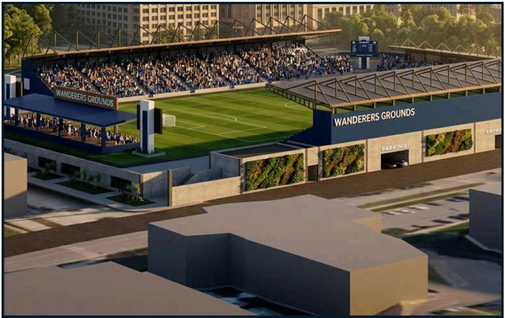
Currently, the cost to fix up and modernize the building sits at $126 million—up from $38 million 12 years ago. The roof of the building seems to be trying to carry the weight of the cost added with each day of inaction.
Will the Forum continue its legacy of being an argument? Mayor Andy Fillmore has already tried to defer the conversation. Another brick loosens in the process.
The curse may be broken in April when City Hall brings the Forum fate back for debate for the 109th year.
Long term budget woes linger
by Matt Stickland
After months of debate, which kicked off late in 2025, at last Tuesday’s Budget Committee meeting Halifax’s councillors put the finishing touches on Halifax’s city budget. Procedurally speaking the budget still needs to be ratified at the end of March, but in reality, the budget is set except for the crying.
The crying will come later, when the city is forced to repay all its current debt, with interest, starting next year. Halifax has been keeping taxes low and deferring maintenance for so long that the city has a backlog of about $4 billion in needed capital projects. But the city can only borrow about $1.8 billion before their credit limit is maxxed out. As a result, council tweaked the long-term capital budget to find a billion dollars worth of desperately needed infrastructure to cut.
And even with those cuts to the capital budget, Halifax’s debt repayments are projected to require an almost 50% tax increase by 2031 to pay back all the borrowing.
One of the city’s major drivers of debt is the municipality’s road maintenance requirements. Just shy of 45% of the city’s road maintenance budget has to be funded by debt going out to 2030. The city just does not have the revenue to take care of the regular, predictable costs of road maintenance in the operating budget or reserves, where regular, predictable maintenance would normally be paid from.
Since road maintenance is a predictable expense, if Halifax were truly concerned about fiscal sustainability, it would charge drivers fees to fund repairs directly or through a reserve contribution to avoid putting regular, predictable maintenance expenses on the city’s credit card.
Fewer of the city’s roads qualify for debt spending as the city can only borrow money for roads that are older than 10 years, and as the weather gets more volatile and vehicles become heavier, fewer of Halifax’s roads qualify for debt-funded maintenance spending. Should this continue in the future, Halifax can expect its road maintenance costs to start seriously limiting the city’s operational budget.
Council passes solid annual budget
by Matt Stickland
The city budget this year was mostly a good news story, and despite pushes from the mayor for austerity measures council mostly chose to invest or keep investing in the city.
Halifax’s special climate tax survived a potential cut. This funding is used to make muncipal buildings more resilient to climate change as well as updating buildings to be more energy efficient. Many of these retrofits include adding renewable energy sources, like rooftop solar. Making buildings more resilient and efficient saves the city a lot of money in the long term.
The African Nova Scotian Road to Economic Prosperity almost wasn’t funded, but instead council voted to reduce their year over year funding from $1 million to $750k.
Council also voted to put tax money where their mouth is and invested almost $1 million dollars to increase road safety. This money will be used to expedite ‘tactical’ road safety measures as well as improving crosswalks with rapid flashing yellow lights.
Some of the bigger ticket investments from council were for 10 busses and 10 new firefighters. The 10 new firefighters were added to the budget by Lower Sackville councillor Billy Gillis because his district, 15, when fully staffed only has 12 firefighters available and the city’s baseline standard response requires 14 firefighters.
The 10 new busses were added by District 10 councillor Kathryn Morse, who wants to see more investment in Halifax Transit to help with overloads, like on Route 28 to the new Bayers Lake Community Outpatient Centre which often struggles for capacity. However, these busses are expected to add three new routes to Transit’s service.
Council flatly rejected cutting the living wage requirement for Halifax’s tenders. Councillors were concerned that cutting janitors’ wages to give landowners a tax break would not help affordability. Councillors also rejected cuts to Parks and Rec and food security.
Besides being laser focused on lowering taxes to the detriment of the city’s fiscal health in future years, the only foolhardy thing council did was try to swindle the Federation of Canadian Municipalities as covered in the last issue of the paper. The city’s application has not been rejected, and sources with knowledge of the funding’s status have indicated to Grand Parade that the city will get the grant. As of right now, Halifax is expected to successfully swindle the FCM, which in turn is expected to save taxpayers $1 million in tree replacement funding.
The Other Stuff
Book club’s next book will be The Score: How to Stop Playing Someone Else’s Game, by C. Thi Nguyen. Meeting in May (date TBD). We will be meeting in District 7, location also TBD!
There’s a new episode of the podcast this week. Listen wherever you get your podcasts and also maybe on the radio down on the Eastern Shore? Stay tuned for that potentially exciting update. But here’s the show from the RSS feed in the meantime.
Doing the crossword at home? Here’s a printable version of the paper!
How did you do on last week’s puzzle? Here is the answer key!