From banks to bikes, 100 years of cop theft

This time, surely, police reform will work
by Katy Jean
The board of Police Commissioners met last week. The meeting was open to the public and mostly about planned provincial police reforms.
Reforms a century in the making.
In the winter of 1931, George Edwin Ritchie was elected mayor of Halifax, with a promise to reform the police department.
Over 60 burglaries, assaults, and holdups both occurred and remained unsolved leading up to the fall of ‘31.
One bank robbery, however, was solved.
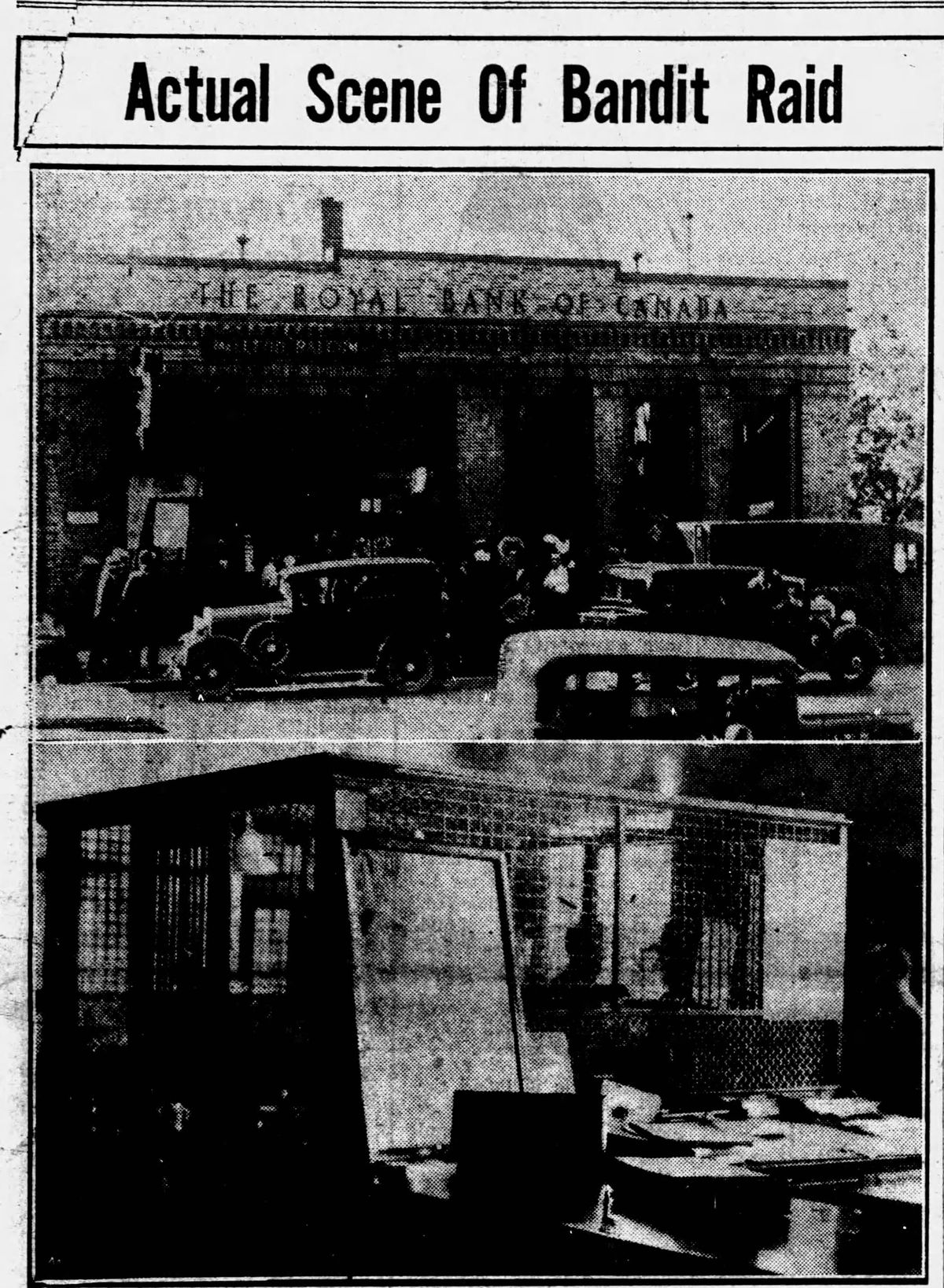
On the morning of August 27, 1931, two “bandits” entered the RBC at Quinpool and Oxford. Their faces covered with woollen stockings. One man held a revolver and the other a sawed off shotgun. It was Shotgun who said, “stick ‘em up, boys”.
The two men got away with $15,807.50. In today’s economy, that’s still a lot of money.
Over 40 police officers were added to the cops’ roster looking for the men and a woman who waited in the car while the robbery took place.
The police asked any members of the public with automobiles to join in the hunt for the gunmen.
The getaway car was spotted in New Glasgow with two nervous-looking men along with a woman trying to read a road map the next day.
Halifax media at the time was covering and highlighting the police department’s years of inadequacies.
Mayor Ritchie chastised the media for doing so; he argued it was advertising Halifax as a city wide open for crime. He alleged criminals were being attracted to Halifax by newspaper articles.
Rather than fulfill his promise of reforming the police, he spent time trying to quiet the press.
When Chipman Smith, Richard Morse, and G. Leroy Dickson were eventually found out, arrested, and charged with the robbery in October of 1931, a search of Smith’s home on Wellington Street was conducted for the cash.
Officers Thomas Gilfoy and Ross Taylor performed the search.
Smith confessed the money would be in his bedroom.
Other officers were present at the search. The bills were mostly found in a cushion of a chair.
The bills were smooth and kept together by elastics from the bank.
Gilfoy and Taylor claimed to have found $3217. Leaving about $12,000 missing.
Chipman Smith claimed someone must have stolen the remaining cash.
An anonymous complaint from within the police department alleged to account for $500 of the stolen cash.
The money was found in the pockets of officers Gilfoy and Taylor. the two who headed the search.
The two were immediately suspended from duty and to be investigated.
When the press arrived to witness the hearing for the two officers, alderman Russell McInnis informed them that it would be closed to the public.
Mayor Ritchie said he personally wasn’t against the press staying, but he agreed with anxieties expressed by some of the other aldermen.
“There will probably be a number of matters talked over during the hearing which it would be most objectionable to have in the press,” the mayor said to the media audience.
He followed this up with the option that the press submit their reports to the police for potential censorship before publishing.
The press waited outside during the now secret meeting.
They were allowed into the room immediately after. The mayor claimed that notes had been taken, which they could access when typed up. But that any evidence shown against the officers would be “impossible.”
When the press asked about the $500 missing, an alderman corrected that the sum of money may have been $685.
The details of how the money changed glossed over and without elaboration.
Former alderman J.J. Power was present in the hearing as counsel for the two accused men. He was as furious as the press and claimed he was not allowed to cross-examine witnesses, was constantly interrupted by alderman McInnis and that he was “vigorously opposed” to the press being locked out.
Ultimately, the commission found that the policemen Ross Taylor and Thomas Gilfoy should be dismissed.
Chipman Smith went to Dorchester prison for five years for crimes associated with the robbery. G. Leroy got three years. Richard Morse did a year in the city prison for assaulting the bank manager. Gilfoy and Taylor never returned to the police department.
The city police have done little in the way of reform.
Last year, constable Fallon Sarah Clarke was charged with selling stolen bicycles and other property.
They have been suspended without pay.
Last week, like Gilfoy and Taylor, Fallon told the court that they’re not guilty.
Peggys Cove Road lobster holding tank fight reduced to a simmer
by Matt Stickland
Down on Peggys Cove Road there’s been a fight about lobsters, more specifically, one of their holding tanks.
At 13100 Peggys Cove Road, there is now an almost complete lobster holding tank facility for NovaShell Wholesale Lobster Inc, owned by Matthew Corkum.
It’s a bit of a weird place for a lobster holding tank, something Corkum acknowledged in an interview with Philip Moscovitch over at the Halifax Examiner. It’s not a great place to get water for the lobsters, but it is a great place to raise a family.
Luckily for Corkum, 13100 Peggys Cove Road is zoned as Mixed Rural Residential in which allows for “fishery support uses.” As long as the facility meets the all the rules of the land use bylaws, like “the total gross floor area of all structures devoted to the fishery support use shall not exceed 1,500 square feet.”
And, of course, as a mixed use single family home the bylaws also mandate that NovaShell have 3.3 parking spots “per 1,000 general industrial uses square feet (92.9 m2) of gross floor area or 1 space per 4 employees.”
This is way more parking than any family needs, but the law is the law.
And as long as the land use bylaws and municipal planning strategies are being followed then there doesn’t need to be a development agreement; whoever is building, in this case NovaShell, can just get permits and start building.
Mona Liu is sitting in the front row of court 702 in the Halifax Supreme Court building. She is representing herself in this matter now. Lawyers are expensive and her probability of success is exceedingly low.
Although Liu, who lives next door most of the year, and her neighbourhood allies of “mostly seniors,” may have genuine gripes about noise or light or any other nuisance bylaw top 40 hit, from a legal perspective, the case Liu is mounting against NovaShell can be derivatively described as ‘NovaShell is following the law, and I just don’t like it.’
There’s been a rash of community pushback against law-abiding development recently. Just a three-hour bike ride, one-hour drive, or transit not available down the Eastern Shore is seeing similar pushback from local residents against MR Developments’ Freedom Way development.
Those residents have some valid concerns, like what 150 units will do to well water levels in the surrounding community. And some concerns that are less valid like the fact that all 150 of the new units will be rentals. By the terms of a loan from the feds 15% of those 150 units will be affordable.
But to make sure wells don’t run dry and to keep renters from degrading the character of the neighbourhood, local residents have turned to AI to help with their research. Google’s AI search says residents in Fall River are having luck overturning the Ingram Drive development, in part, with the help of something called “Developer Covenants.”
One of the selling features of some low-density communities in the HRM is a private contract between the developer and land owner about what is and is not allowed on the land, aka “Developer Covenants.”
A few years ago three local communities appealed to the Nova Scotia Regulatory and Appeals Board, arguing that covenants supersede the Municipal Charter.
All three cases were dismissed on April 15, 2026 by The Board. In all three cases, The Board decision stressed that thanks to the HRM charter it can only consider appeals of city decision that do “not reasonably carry out the intent of the municipal planning strategy or conflicts with the provisions of the land-use by-law or the subdivision by-law.” Or, in other words, as long as developers are obeying the (land use by-)law, the Board has no jurisdiction to hear the case because governments are allowed to govern.
Liu is standing as the judge asks her if she’s representing herself. She is.
“I wish you wouldn’t,” says the judge, sounding resigned. The pale yellow walls, the dark brown pews in the gallery and the harsh fluorescent lights give an air of clogged toilet bowl to the small courtroom.
A clogged toilet bowl of municipal democracy.
Besides being engaged members of their local democracy who proactively read land use bylaws before buying homes in a community, or to lobby for land use changes before development starts, there’s nothing for aggrieved residents to do now except clog up the judicial system by asking for judicial reviews of municipal decisions. Which, like building a lobster holding tank on Peggys Cove Road, is their right.
The judge advises Liu not to use AI when writing her legal briefs.
The fate of her appeal(‘s extension request) will be decided on May 25, 2026.
The Other stuff
Book club has a new book. The date of the meeting is still TBD, but the book itself is Saving Ourselves from Big Car by David Obst. You can get more information about the book at www.stopbigcar.com
Did you know this paper also does a podcast? Did you know it's an award-winning podcast (or will be on June 20)? Listen to this week's episode for more.
Here is the paper for your printer at home
How did you do on last week's puzzle? Here's the answer!