HRM’s debt crisis arrives
City buys 10 new busses without debt
by Matt Stickland
Halifax’s city council all got elected on promises to improve transit, and year over year transit keeps losing time to congestion and busses to age. As the city grows, transit demand increases and more busses are needed to meet the needs of the growing population.
On a note of optimism, councillors decided during this year’s budget debates to invest in some new busses for Halifax Transit.
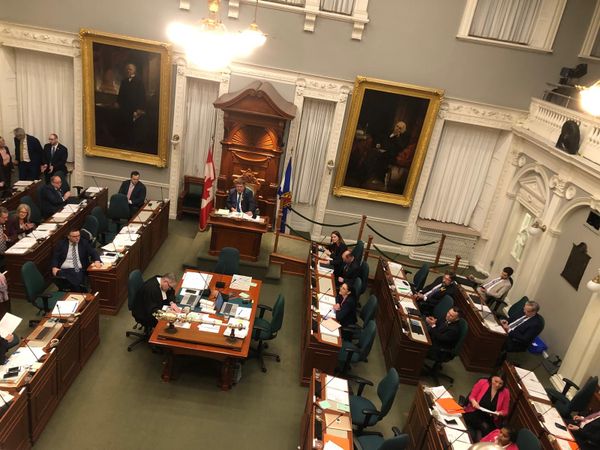
These new busses will cost about $10 million. Just before council was going to start debating this spending, chief financial officer Jerry Blackwood interrupted proceedings to tell council these busses could not be bought with debt. The city has too much debt already.
“We have been saying debt is coming for four years,” Blackwood told the Budget Committee. “The day has come, the debt is here.”
Council’s credit cards are maxxed out and can’t be charged for 10 new busses.
The path to Halifax’s debt crisis is paved with fiscal unsustainability, the same unsustainability that forced Halifax into amalgamation. Halifax’s suburban and rural communities cost more money for the city to service than they make in taxes. This leads to annual operational and capital shortfalls in the city’s suburban and rural communities.
But the city locked into the debt crisis sometime around the start of the mayorship of Mike Savage in 2012.
During Savage’s 12 years as Mayor and in the last two years under the second former-Liberal-member-of-parliament-turned-mayor Andy Fillmore, council has been laser-focused on lowering taxes in the name of affordability.
And that laser focus on lower taxes has led to councils for the past 14 years making shortsighted decisions, including but not limited to: using windfall money to cover regular operational expenses, using debt spending instead of generating new revenue (e.g. using debt for local improvements instead of local area rates or local improvement charges), spending reserves on operating expenses, cutting social programs, getting rid of local area rates to increase dependency on the general tax rate, deferring desperately needed maintenance, and just not building needed new infrastructure.
This problem has been allowed to grow to such a catastrophic level because the severity has been papered over in two key ways.
The first is that even though Halifax can’t take on debt for operational expenses, it can borrow money to pay for capital projects. Which means council can get stuff built and fixed now for cheap, but pay for it later, with interest.
To be fair to past councils, paying for capital projects with debt when interest rates are low is a good idea. If the city can pay back what it owes.
Which leads to the second major issue: the city of Halifax has to balance its operating budget every year. It is not allowed to go into deficit on its day-to-day expenses, like other orders of government. And even though suburban and rural districts run at a loss, downtown Halifax, Dartmouth, and Bedford all run at a pretty substantial budget surplus. An inability to run a deficit on day-to-day expenses combined with an overreliance on property taxes means low-density dwellings in suburban districts rely on downtown’s surpluses — downtown’s dollars are discreetly distributed to the dilapidated suburbs to disguise their decimation.
In other words, if all the city’s districts were sustainable, we could use our surpluses to pay off debt accumulated when interest was cheap. But since low-density districts are not sustainable and since Halifax needs to balance the budget every year, the surpluses generated by good land use have been used to cover the shortfalls in districts with bad land use instead of paying off debt.
There are also budget pressures left over from COVID, the growth of the city necessitating more spending on both new construction and maintenance, on top of over a decade of low taxes. All this means council now finds itself in a situation where its decision in the past to do debt spending and keep taxes low will require a 50%+ tax increase by 2031 just to pay back debt. Add the annual inflationary pressures to that debt and all of a sudden the money required to pay for population/infrastructure growth and debt, and taxpayers are looking at a 50-100% tax increase by 2031 to pay back, with interest, all the of the quote unquote savings of the past 14 years of low taxes.
Or, more simply, the cost of low taxes for the past 14 years is a 50-100% tax increase by 2031.
But in good news, the Budget Committee did find $10m in non-debt money to buy 10 much-needed new busses this year.
After voting to buy the busses councillor Nancy Hartling put forward a motion asking council to consider putting some of the new bus spending on debt. Hartling argued that even though the city’s credit cards are maxxed and even though this would make the busses more expensive, using debt would lower the tax rate this year.
Hartling’s motion failed.
Council tries to swindle charity, risks $1 million grant
by Matt Stickland
During last week’s Budget Committee councillor Sam Austin accused council of “swindling” $1 million from a Federation of Canadian Municipalities (FCM) tree planting grant.
In this year’s budget, the city had $1 million for tree replacement and $1 million for new trees. The $1 million for new trees comes from the FCM grant, which is to be used for “a new tree planting project, with municipal government involvement and accountability.”
But Halifax is in a budget crisis, so council wanted to know if they could spend this $1 million grant for new trees on the city’s planned $1 million for the annual tree replacement program.
Lucas Pitts, the executive director of Public Works, assured council the city’s lawyers read the agreement and using the grant to replace trees instead of planting new trees as promised isn’t breaking the terms of that agreement. This is likely correct as the FCM’s guidelines for eligible costs for the grant program outline eligible tree-related costs and relies on the “municipal government involvement and accountability” bit of the application to ensure the money is spent on new canopy instead of tree replacement. And the only time the grant checks that the money will be spent on new trees is during the application process.
Deputy mayor Patty Cuttell took issue with Austin’s use of the word swindle, saying council wasn’t swindling this grant program by deceiving FCM about what it would be used for once obtained.
But doing a swindle is only possible if council obtains the money in the first place. In an email response to Grand Parade asking if Halifax had obtained this grant money, an FCM spokesperson could “confirm that an application for tree planting funding was submitted.”
When council voted last week to spend grant money on the existing tree replacement program, the city’s pending application became ineligible for the $1 million grant.
Council sends mixed signals on Transit
by Matt Stickland
Last week’s Budget Committee had a big win and a big loss for Halifax’s beleaguered public transit and its riders.
Halifax was supposed to implement a new core service plan for Halifax Transit in time for budget this year. The plan was for a massive investment in busses, for new routes, and increased reliability and it was initially all in this year’s budget.
However, due to over a decade of low taxes, the city suffers from reduced staff capacity. As a result when city staff were tasked with re-examining the Morris Street bikeway they had to stop working on implementing the new transit core service plan.
But staff were able to do enough work on the new plan to have councillor Janet Steele consider it as a last-minute addition to the city’s budget during last week’s Budget Adjustment List (BAL) debates.
The city’s top accountant Jerry Blackwood told council there wasn’t enough debt to borrow money for the busses so if council wanted to buy them they’d go right onto the tax rate.
Councillor Sam Austin pointed out that even though there would be a small (~1% or $30) hike to the tax rate next year, the city would save $4-7 million in interest payments.
The busses were added to the budget on Wednesday and stayed in the budget in spite of an effort from councillor Nancy Hartling to pay for some of the busses with debt to get rid of the spike in this year’s tax rate in favour of a bigger one sometime later.
Later in the meeting, councillor David Hendsbee argued that since council invested in more busses and since tap pay was coming this summer, fares should go up to match the increase in service. Councillor Sam Austin argued that raising fares for transit regularly was probably needed, but small amounts, $0.05-$0.10 at a time, and he hopes tap pay makes that possible.
There is a concern that raising fares increases congestion as people opt for a car instead of paying more for the notoriously reliable for being unreliable Halifax Transit. But councillor Trish Purdy pointed out that the war in Iran is likely to drive up the cost of fuel so much that transit becomes the only affordable option, even with the increased fares.
Councillor Janet Steele told her peers she supported this increase because “it’s just-, it’s 25 cents.” For people dependent on transit, this is roughly equivalent to an additional 3-4% or $90-120 tax increase, which will start this summer and can be paid by tapping your credit card.
The other stuff
Book club’s next book will be The Score: How to stop playing someone else’s game, by C. Thi Nguyen. Meeting in May (date TBD). Where should we meet? Email a suggestion!
There’s a new episode of the podcast this week. Listen wherever you get your podcasts and also maybe on the radio down on the Eastern Shore? Stay tuned for that potentially exciting update. But here’s the show from the rss feed in the meantime.
Doing the crossword at home? Here’s a printable version of the paper!
How did you do on last week’s puzzle? Here is the answer key!